See also

Your city — Москва?
Sand for backfilling
- Category:
- Non-metallic materials
#2914
Description
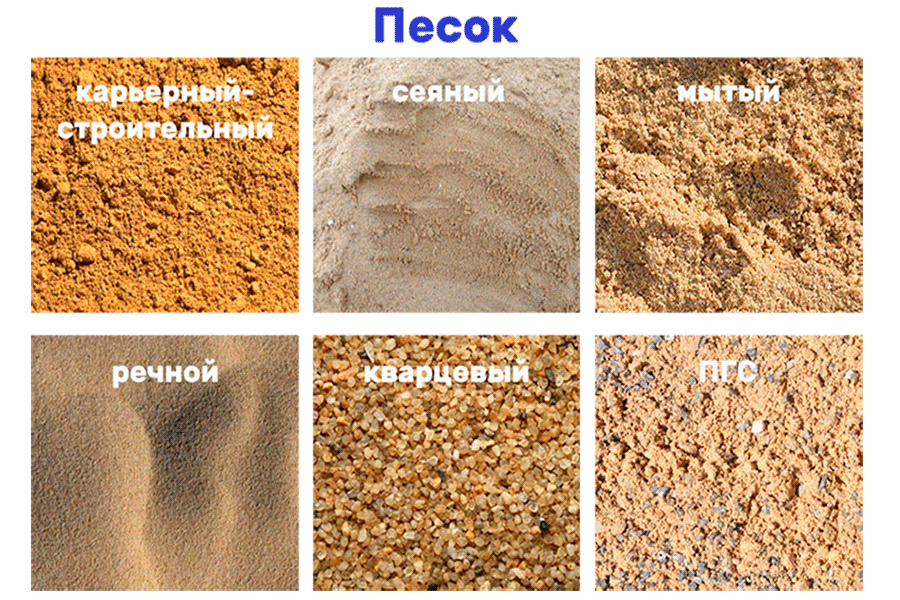
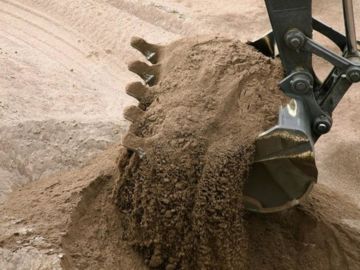
Sand for backfilling . It allows water to pass through very well. And water always flows along the path of least resistance. Therefore, if you equip a sand fill in a denser soil, then all the water will drain into it. If you just need to fill in a hole or make drainage, then this property of sand will only benefit. But this material is not suitable for backfilling pits, wells and foundations. Waterproofing is important for such work, but sand cannot provide it.
There are two ways out in this situation. Either abandon the sand altogether, or equip additional waterproofing. Fortunately, today there are all kinds of mastics, primers and other materials on the market that provide reliable protection from water to foundations and other structures. On the other hand, these are additional costs, and they are not always advisable.
But first things first.
So, the answers to the following questions are:
What are the pros and cons of using sand?
How to choose a filling material
What kind of sand is suitable for backfilling
What are the alternatives to sand?
Let's take a closer look at each point.
Advantages and disadvantages of backfilling with sand
Before filling sand into a pit or trench, it is necessary to sort out its pros and cons for these works.
Advantages of sand for filling:
Low price . Our price of sand for backfilling is 349 RUB/ton. With delivery to the nearest districts of Perm
, this material is considered quite cheap.
Good throughput
The sand has a good carrying capacity. The water goes through it in a natural way, leaving the material dry. Therefore, well-equipped drainage does not retain moisture in the filling. Accordingly, at low temperatures, ice does not form inside the filling, which exerts a heavy load on the base.
But if you backfill with sand into the clay soil, then a so-called "castle" is formed. In other words, water will freely enter the sand layer and remain in it, since clay will prevent it from going below. In this case, drainage is essential.
Ability to seal
The material is well compacted due to the fact that it has fine particles in its composition. Therefore, if all technologies are followed, a dense cushion is formed. It is characterized by a retaining effect on the base, preventing it from swelling and sagging.
Safety
Sand is considered an environmentally friendly material with a low radioactivity index.
Disadvantages of sand for filling:
Poor waterproofing properties
Sand allows moisture to pass through well, but it does not know how to retain it at all. Therefore, it should not be used in those works where it is necessary to limit the access of water to the structure. In addition, during rainy season, the sand can be washed away by underground streams. It is necessary to lay drainage, use sand with a high content of clay particles.
How to choose sand for backfilling
Sand for backfilling must have certain qualities. It is important to consider them when buying. Otherwise, in the future, due to incorrectly selected material, problems may arise with the operation of the facility.
When choosing, pay attention to the following characteristics of sand:
The size module
This indicator plays an important role. It directly affects the throughput of sand.
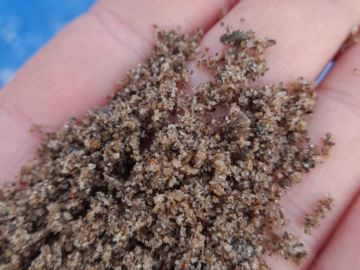
Grain composition
The grain composition shows what the sand is made of, how many impurities are in it. So, if there are a lot of dusty and clay particles in the sand, it will retain water. Ideally, the content of foreign elements in the material should not exceed 3%, our sand contains 1%
Filtration coefficient
This property shows the distance that water passes through the sand in a day. If moisture gets into the material, passes freely and is absorbed by the soil, sand grains perfectly tolerate difficult climatic conditions. The highest rate for river sand is 5-20 m/day.
Bulk density
This property is important to consider when buying a material. It will show you how much sand you need to buy to fill a particular volume. Our sand has a density of 1.47
Radioactivity
All types of sand have a natural radiation background. It is important that the indicator does not exceed the values set by GOST. Ideally, the radioactivity index of any building material should not exceed 370 Bq/kg. In this case, it is considered safe for use in residential areas.
Alternatives to sand in backfilling
In addition to sand, other materials can be used for backfilling. The main idea here is that the soil should be as homogeneous as possible in its composition and should not contain extraneous inclusions.
Of course, it is most logical to fill it with the same material that was dug during the construction of the excavation pit, trench or pit. But this is not always possible. For example, if the soil contains roots, branches, and other debris, it cannot be used as a backfill. If sand is not suitable for some parameters, you can use other materials.
That's what we recommend paying attention to:
Clay
Clay is more difficult to fill in than sand, so it is rarely used. But there are works where this material has no equal. So, clay does not let water through, forming a kind of protection. Therefore, it is ideal in those works where complete waterproofing is required (wells, pits). Only skinny varieties are suitable for filling.
PGS
The sand-gravel mixture is considered a good moisture conductor. If the drainage is properly arranged, the water will not linger and will drain naturally, leaving the PGS layer dry. Accordingly, in winter, ice particles do not form inside, which will put pressure on the base.
Gravel
It is characterized by good drainage properties, so it is advantageous to use it for more demanding work. The disadvantage is the price. And we don't have it yet. It will appear in May.
Broken brick or concrete
Backfilling with brick and concrete batching is appropriate when there is no other material or overburden. It is obtained during the demolition of various structures and old brick buildings, and the rejection of defective bricks in factories. Deep pits can be filled up by fighting, having previously laid monolithic concrete pieces at the bottom. Due to the numerous sharp edges, such material cannot be laid on geotextiles or filled with corrugated pipes and cables.
Email
Phone number
Connection will be made via internet - no charges apply. Microphone access required.



Adding to Favorites
Your comment: