See also

Your city — Москва?
Sand and salt mixture
- Category:
- Non-metallic materials
#2844
Description
The ratio of the components of the mixture may vary and depends on the weather conditions and terrain. The main indicators taken into account are the thickness of the ice layer, the ambient temperature, and the strength and direction of the wind. The sodium monochloride in the composition may be 10, or maybe 50%. Basically, the ratio of three parts of salt and seven parts of sand is used. The most common component is considered to be sand from the river, processed, sifted and having a large fraction. Sand extracted from the quarry is also used, with large grains and a small content of clay impurities.
Methods of sand salt supply
We sell mixtures of sand and salt by weight, in addition, packaged sand salt in bags of 50 kg. The price lists indicate the cost based on the standard ratio of 70% sand and 30% sodium chloride. If necessary, the mixture may vary in composition, and the method of packaging may vary. Our sales consultants will always answer all questions related to possible component ratios and packaging.
The mixture is packaged in moisture-proof, high-density bags weighing 25-50 kg. The absolute water resistance of the bags is due to the fact that the plastic film is not inside, but outside the bag. The special quality of the container allows for free transportation, loading and storage in any conditions, without damaging the internal contents.
If necessary, we can use another type of packaging – a special soft container, otherwise known as a "Big Bag", which can hold up to one ton of contents. We can transport and deliver the mixture in bulk, then the smallest possible batch is one ton. The basis of the sand salt is processed, sifted and washed sand from the river or from the quarry. The fraction should be between 1 and 3 mm in size. The required ingredient should be sodium chloride. The generally accepted proportion of such a composition should be seven parts of sand and three salts, and another ratio is possible – half of sand and half of salt.
Production and application
The production of sand salt consists of weighing and mixing the ingredients by mechanical means. The sand is brought in and cleaned, and the sodium salt of hydrochloric acid is extracted by collecting halite from the bottom of lakes and evaporating it.
Mineral salt is the most effective and cheapest means of combating icing on automobile and pedestrian roads. The effect of the sand salt has a double effect. Firstly, it is an excellent abrasive, due to the presence of sand, the shoes of pedestrians and the rubber of cars reliably adhere to a slippery surface. Secondly, sodium monochloride serves as an instant liquidator of ice on any surface. The low cost and antifreeze, anti-icing qualities make this mixture very popular in winter on the roads of the whole country.
The pros and cons of using a sand and salt mixture
The main advantages of sand salt:
low cost;
wide availability of ingredients;
simplicity in manufacturing and selection of proportions;
the sand salt begins to act immediately, as it gets on the icy surface. Immediately after applying the mixture, you can safely walk and ride;
unpretentiousness in storage;
over time, the mixture does not lose its performance.
Disadvantages of the sand and salt mixture:
If there is a large amount of clay in the mixture that has not been removed, then after applying it to the surface, it acquires a liquid consistency that is quite dirty and unpleasant to look at. The solution to this problem may be to replace quarry sand with river sand. However, as a result, the cost may increase slightly.
During severe frosts, the mixture of sand and salt tends to form hard, large lumps. This seriously complicates the process of spreading along the road. You can avoid such troubles by drying the sand before mixing. The remaining sand can enter the city sewer system and cause blockages.
The unrefined sodium salt extracted by crushing and processing halite, which is in the mixture, can cause the destruction of leather shoes, as well as have a very negative effect on the metal of the car. The most common component ratio is seven parts sand and three parts salt. After weighing, the components are mixed mechanically. The higher the sodium chloride content in the mixture, the higher the antifreeze properties of the composition. If halite is present in large quantities in the composition, the cost of the finished product increases accordingly. This is due to the higher price of salt compared to the price of sand.
Delivery of sand in Tula
We have been engaged in the delivery and shipment of sand and salt mixtures in the city of Tula and throughout the Tula region for many years.
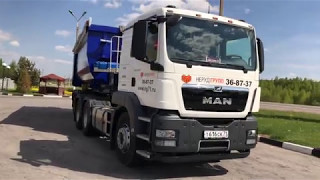
Our company's employees will deliver the sand to the address and ship it. Unloading to the backyard, storage rooms, cellars, etc. is possible by prior arrangement and at a separate cost.


Email
Phone number
Connection will be made via internet - no charges apply. Microphone access required.


Adding to Favorites
Your comment: